

Here’s how we analyzed Emply’s product-market fit in three countries
UX services

User research

Business model validation

User interviews

Product-market fit

International
Emply identifies the most relevant HR functions for small and medium-sized businesses
Emply is an HR platform that simplifies complex HR processes for medium and large companies. In the project described here, the company assessed the product’s market viability for small businesses by testing a streamlined version of the software platform.
Analyzing the product-market fit required an unbiased approach to avoid unconsciously steering participants in a certain direction, which is why Emply entrusted us with conducting the interviews.
We conducted qualitative interviews with 8 HR professionals each from Germany, the Netherlands, and Spain to find out what features the target group really needs and what their requirements are.
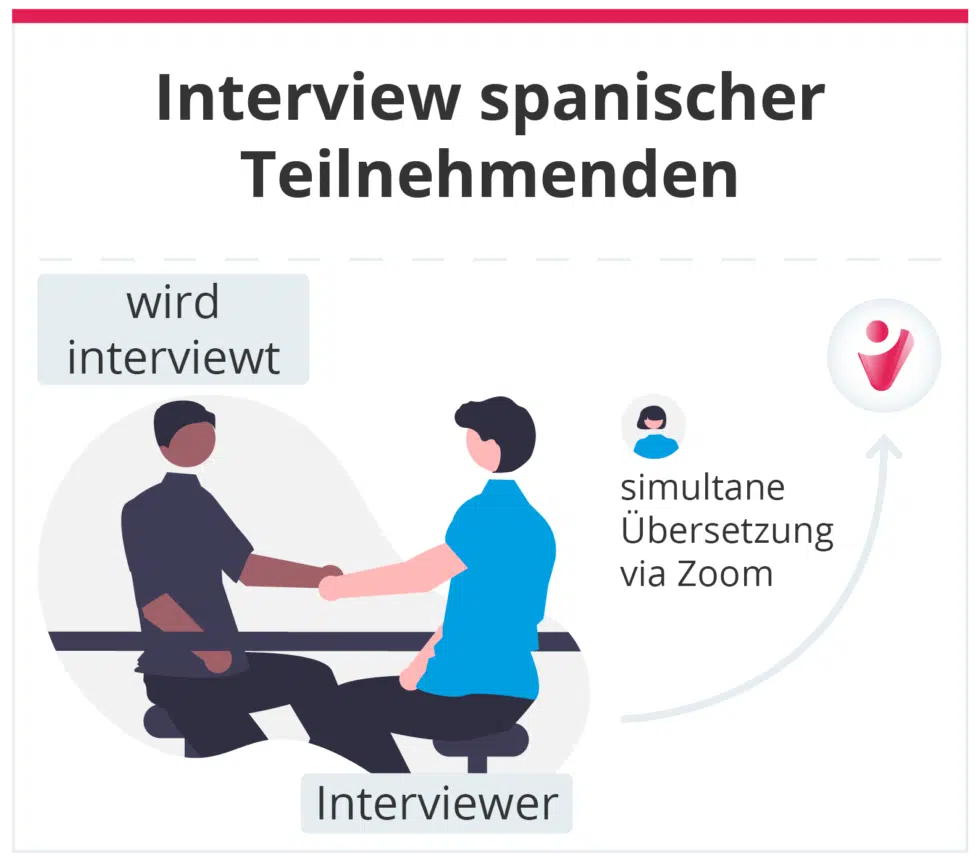
The Germans were interviewed in German. For the Dutch interviews, we recruited participants who use English as their working language and then interviewed them in English. The Spanish participants were interviewed by a Spanish interviewer, with a simultaneous interpreter providing translation via Zoom.
Examine and validate country-specific needs and requirements

Collecting user insights
Gather insights about users in the three markets to determine the fit between the product and the market.

Discovering needs
Discover country-specific needs and requirements for HR software.

Validate
Determine whether the features identified as important for the German market in a previous research study are also significant for the
in the Netherlands and Spain.
From recruiting participants to a detailed report
Our project manager took care of everything: recruiting participants, arranging for translation and foreign-language moderation, conducting the interviews, analyzing the data, and preparing a report that presents the results by country and compares them across the three countries.
Recruitment
We used our international partner panels to find participants from the appropriate target groups.
Interviews
We conducted the German and Dutch interviews ourselves. For the Spanish interviews, we were present in person and used a simultaneous interpreter.
Translation
For Spain, we worked with a Spanish interviewer and a simultaneous interpreter from our international partner network.
Analysis
After all the interviews were completed, we analyzed the data we had collected to identify similarities and differences between countries and industries.
Report
Our detailed report presents all the findings clearly and concisely. The focus is on the differences and similarities between the three countries.
How do HR requirements differ across the
European countries?

To illustrate some of the questions
we showed participants a
prototype; however, they were not supposed to explore
on their own.

We surveyed HR professionals from
various industries, such as
the restaurant industry, the healthcare sector, and
the events industry.

Clear instructions were needed for the Spanish
interviewers to ensure
a consistent interview style
.
Detailed report highlights the differences between the three countries
Some insights from the interviews:
- Time tracking is absolutely crucial for the Spanish market, but it is also important for Germany and the Netherlands.
- Data protection was more important in Germany than in the other two countries.
- The chat feature, which allows HR managers to chat with employees and employees to chat with their supervisors, received mixed reviews. Some considered it unnecessary, while others liked the idea.
We conducted qualitative interviews with 8 HR professionals each from Germany, the Netherlands, and Spain to find out what features the target group really needs and what their requirements are.
The Germans were interviewed in German. For the Dutch interviews, we recruited participants who use English as their working language and then interviewed them in English. The Spanish participants were interviewed by a Spanish interviewer, with a simultaneous interpreter providing translation via Zoom.

We have already used Userlutions’ services for several user research projects and gained valuable insights in the process. The product-market fit analysis provided us with helpful information that enabled us to make informed decisions and take further steps.
Customer
Inger Østergaard Lilja
Chief Marketing Officer
Lessor / Employee
Where do you want to start? Let’s talk—no strings attached.

Birgit Bärnreuther
Head of Consulting
+49 30 / 544 870 24
(Mon–Fri, 9 a.m.–6 p.m.)
Birgit Bärnreuther, Head of Consulting
+49 30 / 544 870 24
(Mon–Fri, 9 a.m.–6 p.m.)