
Getting a fresh, outside perspective and drive strategic development forward
Taking stock: Four years after the first maturity assessment—What has been achieved, and where is room for further development?
UX services

Strategy consulting

Quantitative survey

Maturity assessment

Stakeholder management

In-depth interviews


It was particularly interesting to compare the different stakeholder perspectives. This gave us a nuanced picture of our UX maturity, and we were able to define the relevant areas for development and priorities for our future roadmap much more clearly.
Customer
Marina Kalinina
User Experience Manager
LV 1871
Maturity assessment without a corporate bias

In 2021, LV 1871 had already conducted its first maturity assessment. Based on the results, actions were identified, a UX team was established, and processes were formalized. Since then, there have been significant developments, particularly in the IT sector.
Four years later, the UX team wanted to know: What has really changed? Where are the remaining blind spots? And what are the next steps? This required not only an internal assessment but also an unbiased outside perspective—someone who could look at things without the “corporate glasses.”
The objectives: Assess the current situation, compare it with the initial assessment, define specific measures, and develop a roadmap—all to establish a strategic foundation for the coming years.
An accurate reflection of the reality of the business
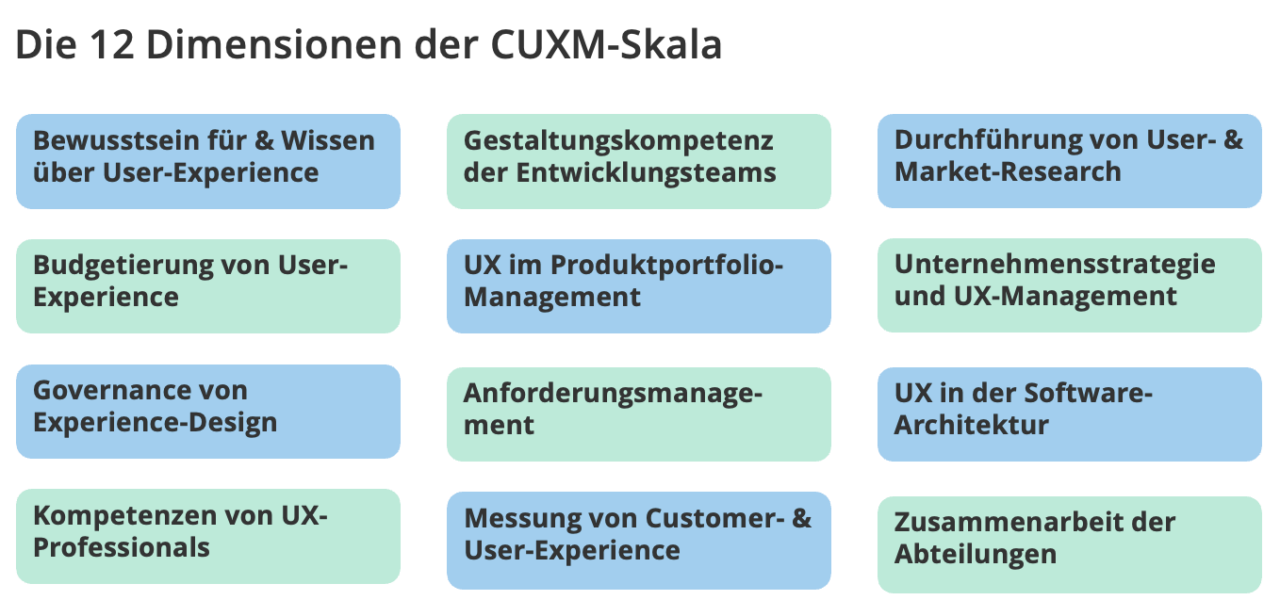
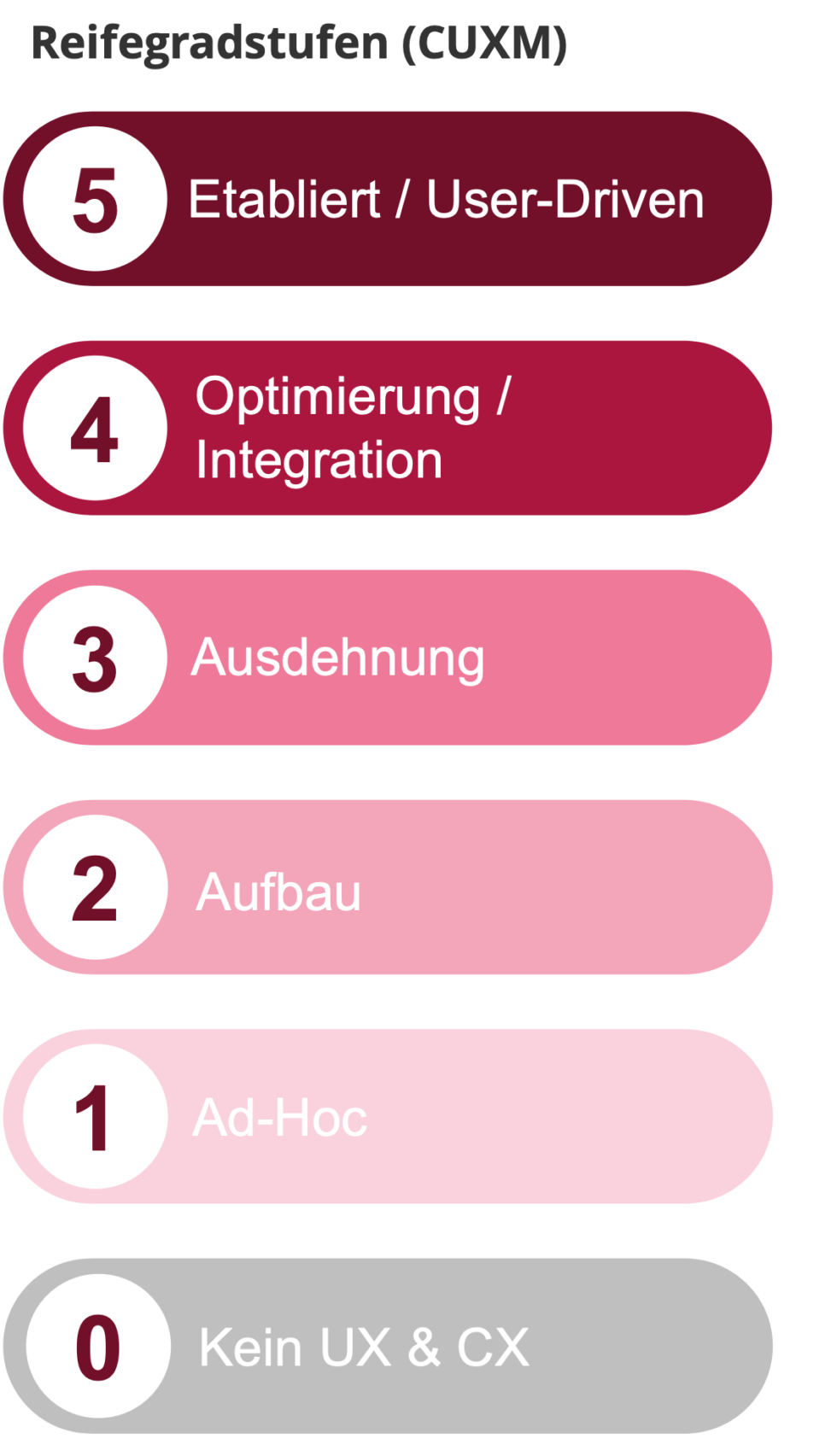
The starting point was the CUXM (Corporate C&UX Maturity) scale, with its 12 dimensions, to ensure good comparability with the results of the last assessment.
However, we tailored them specifically: LV 1871 makes a clear distinction between UX and CX—and that had to be reflected in the questions. At the same time, the questions should be meaningful to non-UX professionals as well, without losing any depth in the process.
A deliberate mix of participants was selected for the interviews: a CTO, product owners from various departments, executives, and those in operational roles—as well as people with and without direct customer contact. This cross-section reflects the reality of the company.
From the first workshop to joint prioritization
Kickoff workshop with the UX team
Joint kickoff, clarification of the team’s goals and outlook.
Quantitative survey (20 stakeholders)
CUXM-based questionnaire, adapted to the structure and language of LV 1871
10 in-depth interviews with stakeholders
Focused, empathetic conversations across the entire company—from the management level down to day-to-day operations.
Presentation + closing workshop
Results were presented, key issues were discussed, and areas of action were prioritized together.

It was clear throughout the project that the three consultants from Userlutions enjoyed their work and really immersed themselves in the stakeholder interviews. That makes all the difference.
Customer
Marina Kalinina
User Experience Manager
LV 1871
3 areas where action is needed have been identified
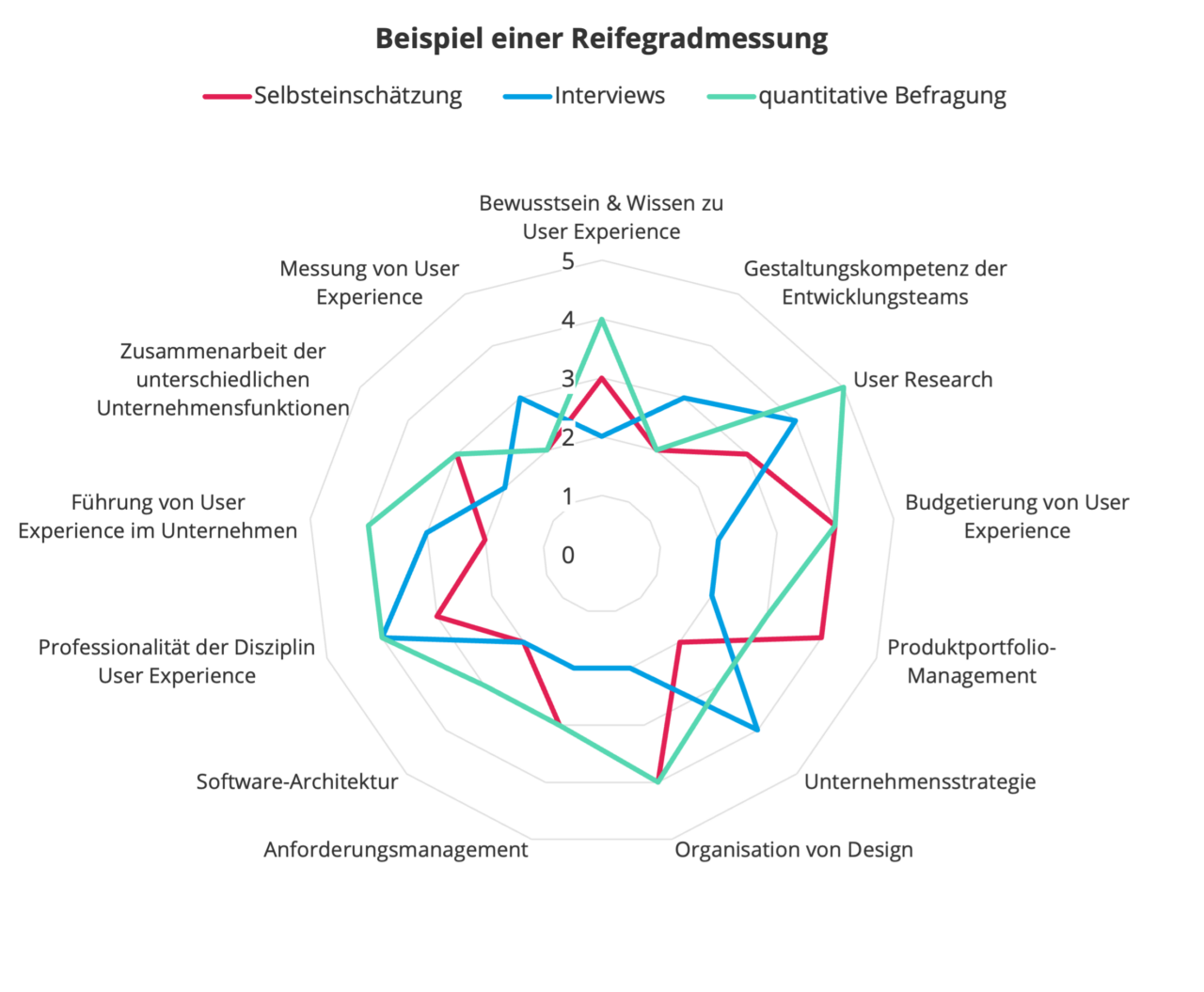
In many areas, a positive trend was evident compared to the initial assessment. Teams with in-house UX expertise, in particular, demonstrated a higher level of UX maturity.
In addition, the establishment of a central UX management team created an organizational foundation for strategically steering UX activities and supporting the ongoing development of a user-centered approach across the board.
At the same time, the analysis identified three dimensions with the greatest potential for development, which serve as priority areas for further advancing UX maturity:
Product portfolio management
New ideas still too rarely arise from specific customer needs.
UX awareness + knowledge
There is a significant gap between departments that do and do not have customer contact. Internal users are often not recognized as users, even though they are the ones who criticize the user-friendliness of the products.
Measuring UX
No company-wide KPIs, no systematic tracking. Yet, in theory, a mechanism already exists—it’s just not being used.
For all three areas, we worked with the LV 1871 team to develop specific actions: establishing the design system as a company-wide standard, introducing coaching (e.g., for design thinking workshops), and providing targeted training for teams working with internal target groups. As a result, existing measures were supported by the findings and supplemented with further initiatives. At the same time, the analysis provided a solid foundation for addressing UX topics even more effectively with various stakeholder groups and embedding them throughout the organization.
The results have provided clarity on where we have already made progress and where the greatest potential lies. The objective assessment of our strengths, areas for action, and priorities was particularly helpful in driving UX forward in a targeted manner.
Customer
Marina Kalinina
User Experience Manager
LV 1871
Would a UX maturity assessment be useful for you as well?
Assessing maturity is worthwhile when gut feelings are no longer enough. Specifically:
- Your UX team has been working for a while now, and you want to know what they’ve actually accomplished within the company.
- Stakeholders react differently to UX issues, and no one knows exactly why.
- Measures are underway, but there is no strategic foundation for the next steps.
- Internal and external perspectives on UX differ—and you want to gain a solid understanding of this.
- You want an outside perspective—one that looks at things without the “corporate blinders” and doesn’t shy away from uncomfortable truths.
By conducting a maturity assessment, you’ll lay the groundwork for clear priorities, better internal communication, and initiatives that will truly advance your company’s UX efforts.
Sounds interesting? Feel free to contact us if you’d like to learn more about our approach:
Where do you want to start? Let’s talk—no strings attached.

Birgit Bärnreuther
Head of Consulting
+49 30 / 544 870 24
(Mon–Fri, 9 a.m.–6 p.m.)
Birgit Bärnreuther, Head of Consulting
+49 30 / 544 870 24
(Mon–Fri, 9 a.m.–6 p.m.)